

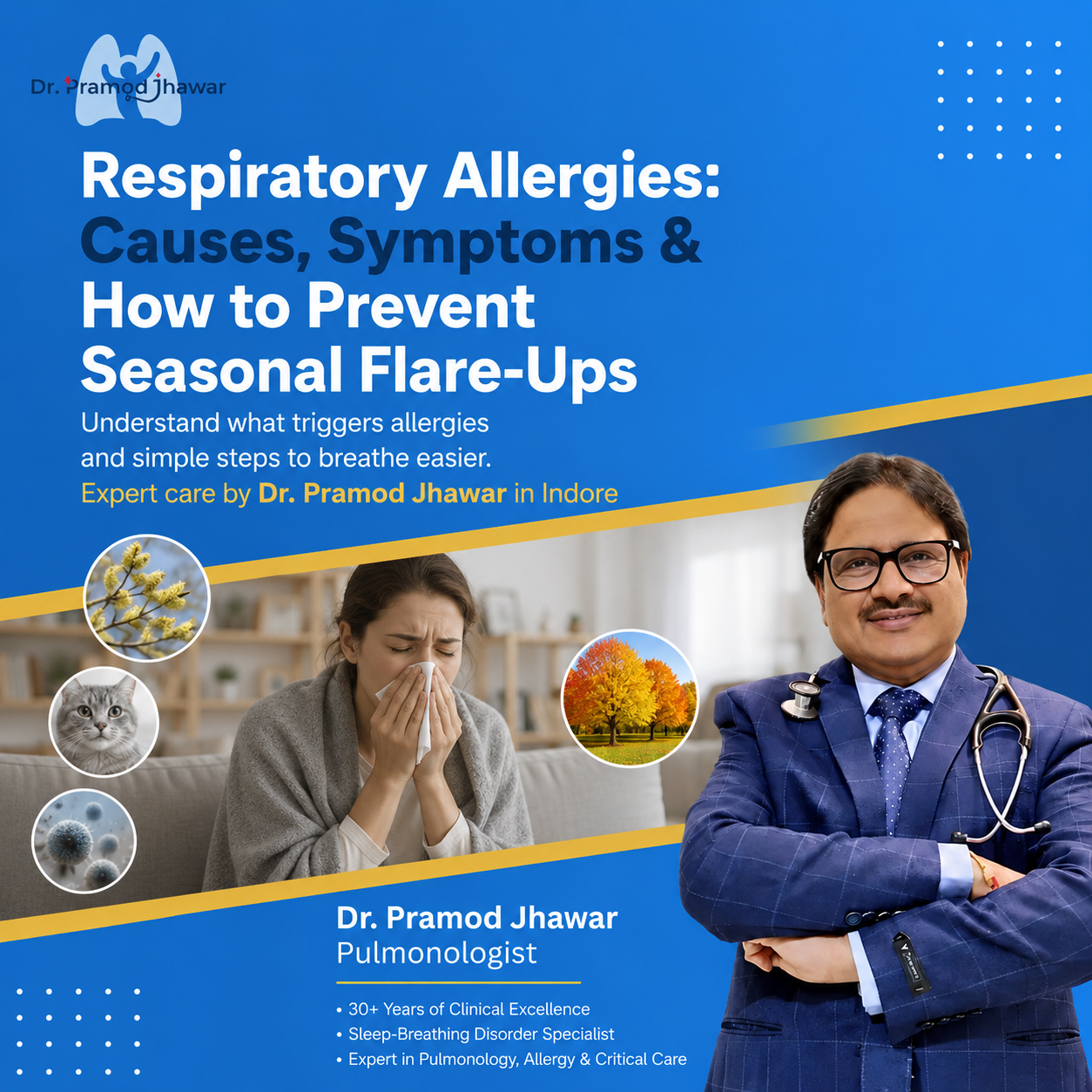

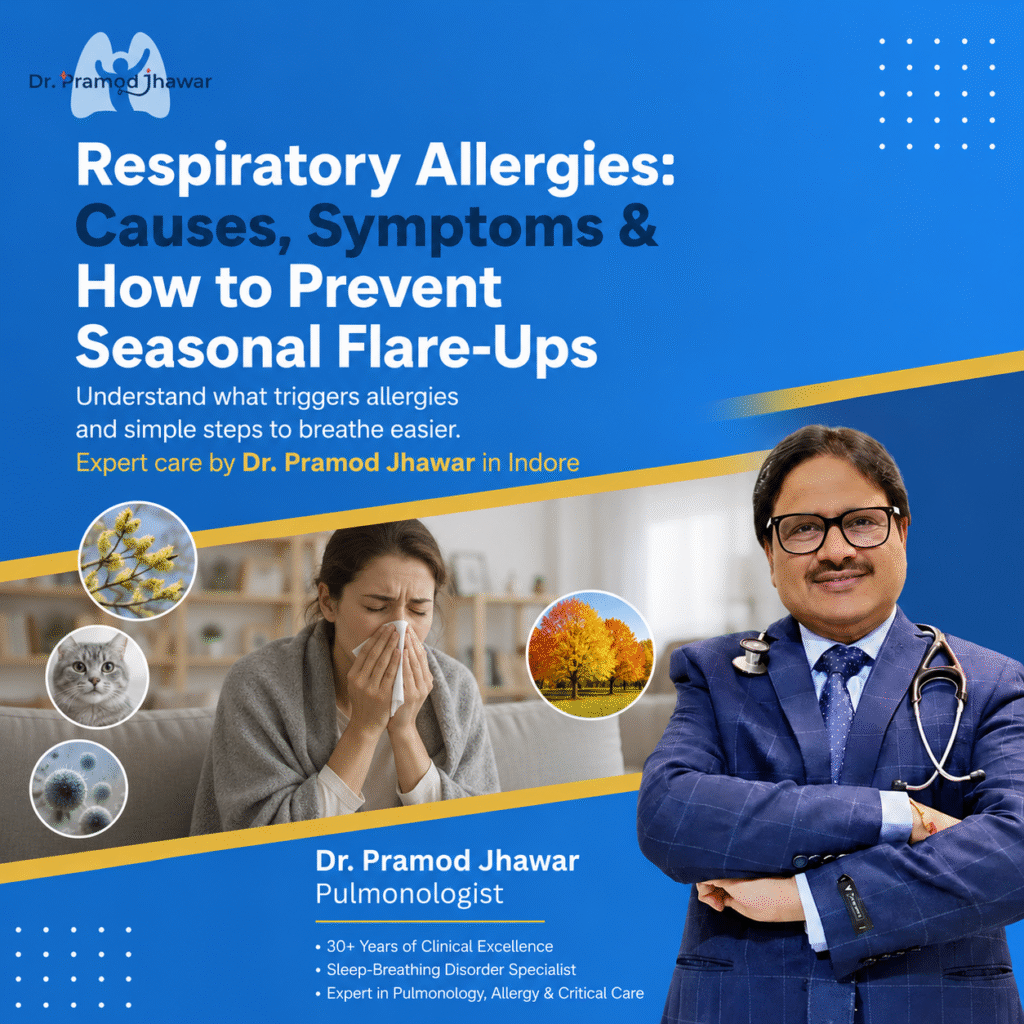
Respiratory allergies are among the most common health problems affecting both children and adults. Sneezing, a blocked nose, itchy eyes, coughing, wheezing, and breathing difficulty may seem like minor seasonal issues, but if left untreated, they can significantly affect daily life and may even increase the risk of asthma or other chronic respiratory conditions.
If you are searching for the Best Allergy Treatment in Indore or looking for an experienced Chest Physician in Indore, understanding the causes, symptoms, and preventive measures for respiratory allergies is the first step toward better respiratory health.
With over 30 years of experience, Dr. Pramod Jhawar, one of the leading Chest Physicians and Pulmonologists in Indore, specializes in diagnosing and treating respiratory allergies, asthma, COPD, allergic rhinitis, lung infections, and other breathing disorders using advanced diagnostic techniques and personalized treatment plans.
What Are Respiratory Allergies?
Respiratory allergies occur when the immune system overreacts to harmless substances present in the environment. These substances, known as allergens, trigger inflammation in the nose, throat, airways, or lungs, causing symptoms that range from mild irritation to severe breathing difficulties.
Respiratory allergies may affect the upper airway (nose and sinuses) or the lower airway (lungs and bronchial tubes). Many people experience symptoms during specific seasons, while others have allergies throughout the year due to continuous exposure to indoor allergens.
Early diagnosis and proper Respiratory Allergy Treatment in Indore can help control symptoms, reduce complications, and improve quality of life.
Common Causes of Respiratory Allergies
Several environmental factors can trigger respiratory allergies. Identifying these allergens is an important part of successful treatment.
The most common causes include:
- Pollen from trees, grasses, and weeds
- House dust mites
- Mold and fungal spores
- Pet dander from cats and dogs
- Air pollution
- Smoke from cigarettes or biomass fuel
- Strong perfumes and chemical fumes
- Weather changes
- Cold air exposure
- Cockroach allergens
Some individuals may react to only one allergen, while others may be sensitive to multiple triggers.
Who Is More Likely to Develop Respiratory Allergies?
Although respiratory allergies can affect anyone, some people are at a higher risk.
Risk factors include:
- Family history of allergies or asthma
- Existing allergic rhinitis or eczema
- Frequent exposure to dust or pollution
- Smoking or passive smoking
- Occupational exposure to chemicals or dust
- Living in highly polluted urban areas
- Weak respiratory health
People with these risk factors should seek early evaluation from a Pulmonologist in Indore if symptoms become frequent or severe.
Common Symptoms of Respiratory Allergies
The symptoms of respiratory allergies may vary depending on the allergen and the severity of the immune response.
Common symptoms include:
- Frequent sneezing
- Runny or blocked nose
- Itchy nose and throat
- Watery or itchy eyes
- Persistent dry cough
- Wheezing
- Chest tightness
- Shortness of breath
- Difficulty breathing during seasonal changes
- Fatigue due to disturbed sleep
Some patients experience symptoms only during certain seasons, while others have year-round allergies caused by indoor allergens.
Seasonal Allergies vs Year-Round Allergies
Understanding the type of allergy helps doctors recommend the most effective treatment.
Seasonal Respiratory Allergies
Usually triggered by:
- Tree pollen
- Grass pollen
- Flowering plants
- Seasonal weeds
Symptoms often worsen during spring, monsoon, or autumn.
Perennial (Year-Round) Respiratory Allergies
Common triggers include:
- Dust mites
- Pet hair
- Indoor molds
- Cockroach allergens
These symptoms may persist throughout the year and require long-term management.
How Are Respiratory Allergies Diagnosed?
Respiratory allergies often share symptoms with asthma, sinus infections, viral illnesses, and other lung conditions. Therefore, an accurate diagnosis is essential before starting treatment. Early diagnosis helps identify the exact trigger and allows doctors to create an effective treatment plan.
If you are experiencing frequent sneezing, persistent coughing, wheezing, or breathing difficulties, consulting an experienced Chest Physician in Indore can help determine the underlying cause.
The diagnostic process may include:
Detailed Medical History
Your doctor may ask about:
- Duration and frequency of symptoms
- Seasonal or environmental triggers
- Family history of allergies or asthma
- Exposure to dust, smoke, or pets
- Previous respiratory illnesses
- Lifestyle and occupational exposure
Understanding these factors helps identify possible allergy triggers.
Physical Examination
A thorough examination of the nose, throat, chest, and lungs helps detect signs of allergic inflammation or airway obstruction.
Your pulmonologist may check for:
- Nasal swelling
- Wheezing
- Reduced airflow
- Signs of chronic allergy
- Lung function abnormalities
Pulmonary Function Test (Spirometry)
Spirometry is one of the most important investigations for patients with respiratory allergies, especially if asthma is suspected.
This test measures:
- Lung capacity
- Airflow obstruction
- Breathing efficiency
- Severity of airway narrowing
Dr. Pramod Jhawar has extensive experience in performing advanced pulmonary function testing for patients with asthma, COPD, and respiratory allergies.
Allergy Testing
Identifying the exact allergen is one of the most effective ways to prevent future flare-ups.
Depending on your symptoms, your doctor may recommend:
- Skin prick allergy testing
- Blood allergy tests
- Immunoglobulin (IgE) testing
- Specific allergy profile tests
These investigations help identify triggers such as pollen, dust mites, pet dander, mold, or certain environmental allergens.
Chest Imaging
In selected cases, additional investigations may be advised to rule out other lung conditions.
These may include:
- Chest X-ray
- High-resolution CT (HRCT) scan
- Bronchoscopy (when clinically indicated)
These tests help distinguish respiratory allergies from infections, chronic lung diseases, or structural abnormalities.
Can Respiratory Allergies Lead to Asthma?
Yes. Untreated respiratory allergies can increase the risk of developing allergic asthma. Continuous exposure to allergens causes persistent inflammation in the airways, making breathing more difficult over time.
Symptoms suggesting asthma include:
- Wheezing
- Chest tightness
- Breathlessness during exercise
- Night-time coughing
- Difficulty breathing after exposure to allergens
Early Respiratory Allergy Treatment in Indore can help control inflammation and reduce the likelihood of asthma-related complications.
Treatment Options for Respiratory Allergies in Indore
The treatment plan depends on the severity of symptoms, allergy triggers, and the patient’s overall respiratory health.
Allergen Avoidance
The first step is reducing exposure to allergy triggers.
Your doctor may recommend:
- Keeping the home dust-free
- Using air purifiers
- Avoiding cigarette smoke
- Wearing a mask in dusty environments
- Limiting outdoor activities during high pollen seasons
- Keeping windows closed during peak pollen hours
Simple preventive measures can significantly reduce allergic flare-ups.
Medications
Many patients benefit from medications that help control allergy symptoms and reduce airway inflammation.
Treatment may include:
- Antihistamines
- Nasal sprays
- Bronchodilators (when required)
- Inhaled medications
- Anti-inflammatory medicines
The choice of medication depends on the severity and frequency of symptoms.
Allergy Immunotherapy
For patients with persistent or severe allergies, immunotherapy may be recommended.
This treatment gradually helps the immune system become less sensitive to specific allergens, reducing symptoms over time and lowering the risk of repeated flare-ups.
Advanced Respiratory Care
Patients with complex respiratory conditions may require specialized evaluation and advanced pulmonary care.
With more than 30 years of experience, Dr. Pramod Jhawar offers comprehensive Respiratory Allergy Treatment in Indore, including advanced pulmonary function testing, bronchoscopy, allergy evaluation, asthma management, COPD care, and personalized treatment plans aimed at improving long-term respiratory health.
Why Choose Dr. Pramod Jhawar for Respiratory Allergy Treatment in Indore?
Managing respiratory allergies requires more than temporary symptom relief. Proper diagnosis, identification of allergy triggers, and long-term management are essential for preventing repeated flare-ups and protecting lung health. Dr. Pramod Jhawar, one of the most experienced Chest Physicians and Pulmonologists in Indore, provides comprehensive Respiratory Allergy Treatment in Indore using advanced diagnostic techniques and evidence-based treatment plans.
With over 30 years of experience, Dr. Jhawar has successfully treated thousands of patients suffering from respiratory allergies, asthma, COPD, allergic rhinitis, chronic cough, lung infections, and sleep-related breathing disorders. His expertise in Interventional Pulmonology, Bronchoscopy, Pulmonary Function Testing, and Allergy Management enables accurate diagnosis and effective long-term care.
Patients choose Dr. Pramod Jhawar for:
- Advanced Respiratory Allergy Treatment in Indore
- 30+ years of clinical experience
- Expertise in asthma and allergy management
- Advanced pulmonary function testing (Spirometry)
- Bronchoscopy and interventional pulmonology
- Personalized treatment plans
- International training in respiratory medicine
- Patient-centered and evidence-based care
His goal is not only to relieve symptoms but also to reduce the frequency of seasonal allergy attacks and improve long-term respiratory health.
How to Prevent Seasonal Respiratory Allergy Flare-Ups
Preventing allergen exposure is one of the most effective ways to reduce allergy symptoms. Along with proper Respiratory Allergy Treatment in Indore, adopting healthy daily habits can significantly lower the risk of seasonal flare-ups.
Follow these preventive measures:
- Avoid exposure to dust, smoke, and air pollution.
- Wear a mask while traveling or cleaning dusty areas.
- Keep your home clean and free from dust mites.
- Wash bedding regularly in hot water.
- Use air purifiers if recommended.
- Keep windows closed during high pollen seasons.
- Avoid smoking and secondhand smoke.
- Stay well-hydrated.
- Follow your prescribed allergy medications regularly.
- Schedule regular follow-ups with your Pulmonologist in Indore.
Early prevention can help reduce the severity and frequency of allergy symptoms.
Frequently Asked Questions About Respiratory Allergy Treatment in Indore
What are the most common symptoms of respiratory allergies?
Common symptoms include sneezing, runny nose, nasal congestion, itchy eyes, persistent cough, wheezing, chest tightness, and shortness of breath.
Can respiratory allergies lead to asthma?
Yes. Untreated respiratory allergies can increase airway inflammation and may contribute to the development or worsening of allergic asthma.
How is Respiratory Allergy Treatment in Indore diagnosed?
Diagnosis may include a detailed medical history, physical examination, pulmonary function tests (Spirometry), allergy testing, blood tests, and imaging studies when required.
Can respiratory allergies be cured permanently?
While allergies cannot always be completely cured, proper Respiratory Allergy Treatment in Indore can effectively control symptoms, reduce flare-ups, and improve overall quality of life.
When should I consult a Chest Physician in Indore?
You should consult a Chest Physician in Indore if you experience frequent sneezing, chronic cough, wheezing, breathlessness, recurrent respiratory infections, or allergy symptoms that interfere with your daily activities.
Conclusion – Respiratory Allergy Treatment in Indore
Respiratory allergies are more than a seasonal inconvenience—they can affect your breathing, sleep, work, and overall quality of life if left untreated. Recognizing early symptoms and seeking timely Respiratory Allergy Treatment in Indore can help prevent complications such as asthma and chronic airway inflammation.
With over 30 years of experience, Dr. Pramod Jhawar provides comprehensive Respiratory Allergy Treatment in Indore through advanced allergy evaluation, pulmonary function testing, bronchoscopy, asthma management, and personalized treatment plans. His patient-focused approach, combined with modern diagnostic techniques and international expertise, helps patients achieve better respiratory health and long-term relief from seasonal and year-round allergies.